Thursday, January 9, 2014

Madame de Pompadour: From Rococo to Rihanna

Born in 1721, Jeanne-Antoinette Poisson became maîtresse en titre to Louis XV of France in 1745 and thus was re-born as (the Marquise) Madame de Pompadour. Not just a pretty face, for almost 20 years she ruled as royal mistress, a title that in 18th century France not only held a great deal of affluence, but also influence. De Pompadour was a lover, a confidante and at times even a political advisor to King Louis.


A devout patron of the arts, she commissioned from Boucher, La Tour and many other artists now remembered as the cream of the crop in the Rococo style. She used art to further bolster her image, and quite frankly, it worked. The world now remembers De Pompadour for her elegant and charming portraits and commissioned pieces.

The world also remembers her for something else: a borderline chic and sometimes outrageous hairstyle known as-you guessed it-the Pompadour!

The Pompadour do' features a very accentuated 'pouf' at the front. To be honest, I have seen many portraits of the Marquise and have never really noticed her wearing this hairstyle.

Curious, right?

If anything, the Pompadour is very reminiscent of Marie Antoinette. It would be a few years after Pompadour's reign as maîtresse until Marie Antoinette stepped into the scene. It would be even longer until the ill-fated queen started wearing the extreme hairstyles that would rock the 18th century fashion scene.


Fast forward to the 21st century now: Rihanna sports a modern version of the Pompadour. And, as fashion goes these days, if Rihanna is sporting it, everyone else soon follows suit.


Miley Cyrus, Janelle Monae, Kim Kardashian...many women of Hollywood have been seen rocking their own takes on the Pompadour.


Here is where things get pretty interesting. From the 1950's onwards we see a surge of popularity of the Pompadour (a toned down version of it) on MEN!


From The King himself (of Rock N Roll, not of France), Elvis Presley, to Justin Bieber, to David Beckham (drool) the Pompadour reigns supreme as a sophisticated yet edgy and modern style for men.

So, I suppose if you're not remembered for your patronage of the arts and political position, an over the top hairstyle is the next best thing. Right?

fefe x

Sunday, December 15, 2013

Some Snowy Sunday Inspiration: Queen of Fashion by Caroline Weber

Salut!

I hope that everyone is staying warm and cozy on this wintry weekend!

While this is going to be a 'mini' post of sorts (the bigger, juicier stuff is coming, fear not), I thought I'd do some sharing nonetheless.

As I sat drinking a cup of hot cocoa by the window today, I happened to glance over at my book shelves and she (by she I mean, this book) spoke out to me.

In my first ever post about Marie Antoinette I mentioned the book Queen of Fashion: What Marie Antoinette Wore to the Revolution by Caroline Weber. The book is phenomenal, and served as a major inspiration behind my beginning this blog. I came to the conclusion today that this book deserved more than a mere mention, but instead an entire post.


I read this book back in 2008 when I was working on my undergraduate degree at the University of Toronto. The amazing opportunity to meet Ms. Weber came along that same year when she came to Toronto to do a lecture and meet & greet at the Royal Ontario Museum.

You cannot begin to even fathom my delight/excitement/anxiety at the prospect of meeting her! Can we say huge fan?

In any case, this book, while well researched, is such a juicy read that you'll fly through the pages in no time (I myself read the book while on a weekend away to my Opa's for Thanksgiving).

Queen of Fashion discusses an idea in the study of history that I believe gets overlooked: the importance of fashion to culture. In this particular case, in France during the years leading up to the French Revolution.

Laden with poofs, pearls, scandal and suspense, I recommend this book to any other fellow lovers of fashion history.


Until next time,

fefe x

Thursday, December 12, 2013

Hello Again, Old Friends

Bonjour!

I know, it's been quite some time. Years actually.

I've missed writing! So very much. Lately I've been really feeling to get back into the swing of things and talk about what I love most and share it with the world: scandal, fashion and all things juicy throughout history.

So, bear with me madames and monsieurs. I'm going to re-vamp my little blog :)

Until next time.

fefe x


Wednesday, June 29, 2011

La Mode, C'est Moi - Louis XIV: King of Fashion


Louis XIV the enigmatic Sun King deserves an entire blog dedicated solely to him, but in this case here, I will pay homage to man who revolutionized fashion throughout the late 17th and early 18th century. Louis is really such a colossal figure, both then and now, in France and abroad in terms of art, architecture, food...anything and everything you can think of  in terms of European culture in the said period, Louis probably had some sort of influence on, if not absolute power of it.


A handsome man in his youth and big time ladies man even in his upper years, I always pictured Louis, probably with some degree of accuracy, to be a very vain man, to say the least. As the Roi Soleil an absolute monarch virtually next to God in his eyes, Louis launched a virtual revolution in men's fashion. Whatever the Sun King did, his courtiers emulated, and thus would spread the style of Louis XIV, trends that would spread throughout the continent and endure, at least in variations, for over a century.


From head to toe, literally, Louis changed the fashion scene for men. As a child Louis was said to had the most beautiful and luscious set of golden curly hair. As time passed, his waistline widened and hair started to thin out, Louis latched on to youth by consistently wearing immense full curled wigs. Wigs became a must have for men all over. I can hardly picture a French courtier of the period without a head of long, thick, and sometimes perhaps excessive, faux curls.

A young Louis XIV
Another shift in mens wear came in the form of breeches and coats. Generally, under Louis coats were worn rather short (or shorter at least), and made of the finest silks, satins and velvets, and intricately embroidered. Hoses were white or often coloured to match the rest of the ensemble. Shapely legs were the "it" factor of the day, as it seems in most portraits Louis is showing his own off quite splendidly.

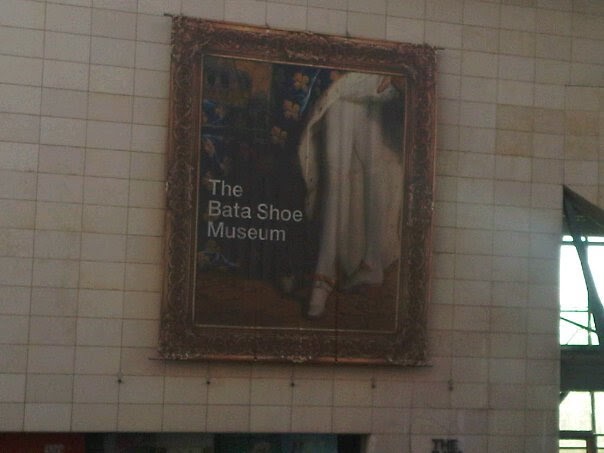
Alas, here is finally my absolute favourite part of Louis' fashion take over: HEELS! While boots were the go to foot wear for men previously, Louis ushered in an era of frivolity for men as it seems. Under Louis, high heels became a tell tale sign for status and wealth for women and men alike. Heels, often five or six inches tall, with ribbons, rosettes and buckles were all the rage. As I stated in the preceding paragraph, Louis LOVED to show off a little, or a lot, of leg!

Shoe detail of Hyacinthe Rigaud's portrait of Louis XIV outside The Bata Shoe Museum, Toronto

Of course, Louis being the absolute monarch that he was had to lay down the law when it came to high heel wearing around his court. Heels worn by others could never be taller than Louis - no questions asked. 

Another very interesting tid bit is that Louis passed a law stipulating that only those given permission (usually those granted access to his coveted court) were allowed to wear red coloured heels, which he frequently wore. Red heels and soles on shoes still to this very day remain a symbol of status, privilege and all around fabulous-ness! (i.e. Louboutins)


So, next time you're out looking for a new pair of red bottom sling backs or stilettoes care of Mr. Louboutin, thank Louis for the inspiration!


fefe 

Tuesday, November 30, 2010

Queen Victoria's White Wedding


About a week or so ago I sat down and watched "The Young Victoria", a pleasant dramatization based on the young adulthood of this most notorious queen. I'm ashamed to say that my studies on Victoria and Victorian Britain are a bit fuzzy, but nonetheless this movie rekindled my interests.

Reflecting back on the few undergraduate courses I did on this era I remembered the continuing idea, or perhaps rumour, or maybe even fact, that Queen Victoria had single handedly begun the trend of brides wearing white on their wedding day.


Weddings have traditionally been, as they are today, a day for brides to sport their finery. Brocaded gowns, lace, silk, satin, threaded in white, gold and silver were all common features of gowns prior to Victoria's own. Dripped in jewels and sometimes fur, royal brides did not commonly wear white gowns (think about this anytime you watch a hist-fic movie from now on--when not set in the modern era, the bride is not usually wearing white!).

No doubt Victoria was not the first royal bride to wear white on her wedding day, this is not the claim at all.  Centuries before Victoria's nuptials to Prince Albert, Anne of Brittanny was said to have married Louis XII in a white gown in 1499. Marguerite de Valois supposedly married Henri de Navarre in beautiful white ermine in 1572. It was common for brides, especially in the 18th and 19th centuries to wear gowns of white muslin. There are dozens of brides who chose to wear white on their special day.


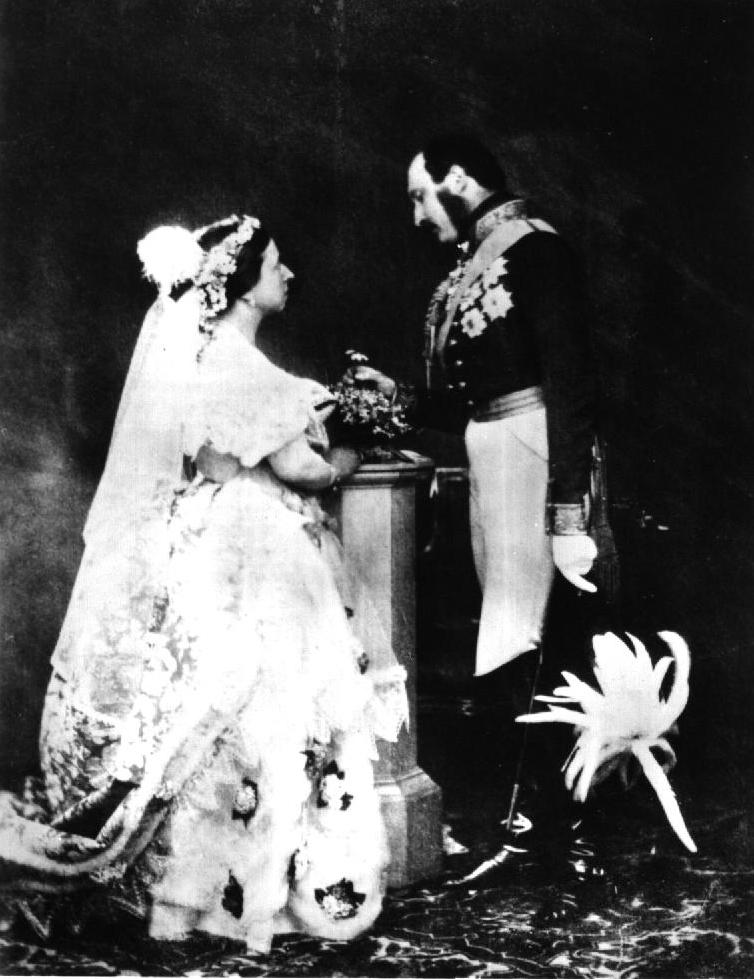
Everything changed however in 1840, when Victoria married Albert in a white satin gown. Adorned with blossoms, jewels and a long, luxurious veil, this official wedding photo was published internationally and begun a white-wedding gown-fever among well to do, high society brides. White wedding gowns gained increasing popularity throughout the rest of the century, becoming the common colour of choice by the 1940's, and still til this day remain the iconic colour of gowns for brides world wide, whether they are pure, chaste and innocent in nature, or not!

bisous

fefe

Saturday, November 20, 2010

Vivien Leigh also know as Scarlett O'Hara


Vivien Leigh, originally named Vivian Mary Hartley, was born in India in 1913 to British parents.  Vivien famously played the role of Scarlett O'Hara in Gone with the Wind and co-starred along side Clark Gable whom she did not get along with.  Vivien won an Oscar for her performance and later won another Oscar for her role as Blanche DuBois alongside Marlon Brando in A Street Car Named Desire.  Famous for her trademark lifted right eyebrow and her striking beauty, Vivien was as determined and stubborn as her character Scarlett. She is reported to have stolen her first husband away from another woman, and then left him for the gorgeous and famous Laurence Olivier - who left his then wife for Vivien.


Vivien played alongside Olivier in many performances and the two eventually were married in 1940. The small wedding ceremony was attended by friend Katherine Hepburn. Vivien played many famous female roles including Cleopatra and Ophelia but her diagnosis with tuberculosis and the fate of having several miscarriages,  exasperated her struggle with bi-polar disorder.  Due to her bouts of depression and anger, which Olivier seems to have experienced the brunt of, the couple separated.  Vivien had other relationships and Olivier eventually married actress Joan Plowright. However, Vivien and Olivier do appear to have remained in love with each other.


Vivien died in 1967 after another bout of tuberculosis, and Oliver rushed to her apartment, but did not make it in time.  Although nearing the end, her life was rather sad and tumultuous, Vivien really was a star.  She had a remarkable beauty and played extremely important cinematic female roles that are still famously known. If you would like to read more about Vivien, her former husband wrote of her in his memoir titled, Confessions of an Actor, or read Vivien Leigh: A Biography by Michelangelo Capua.


Vivien is  most definitely my favourite actress.  I -embarrassingly- used to practice Scarlett O'Hara lines in front of my mirror as a child, while raising my right eyebrow in that femme fatale way Vivien did.  I strongly recommend watching the lengthy Gone with the Wind, if you are one of the few persons on this earth who have not seen it.  The dresses alone make the movie a must-see.


Lots of Love,

Thérèse xo

Thursday, November 18, 2010

The "People's Princess" and Rebellious Royal: Diana, Princess of Wales


Bonjour all! For a while I had been trying to figure out who I would like my latest Queen of Fashion post to be all about. I stewed and brewed over other candidates when today I finally had a "Eureka!" moment. Lady Diana was always going to be a post subject, and although I wanted to save her for a later time, in light of this week's news of the engagement of the future king and queen of England, I believe there couldn't be a better time to honor the woman who breathed life back into the royal family!

We are all probably more familiar with the late princess, in comparison to my other queens. During her life, and even in death (1961-1997) Diana has remained an undisputed icon of fashion, beauty, grace and humility. Highly popular with the public, Diana was known for her charitable work. AIDS, leprosy, campaigning to ban land mines, the princess went well above and beyond the call of duty, and was very hands on and passionate about her work.

From a fashion stand point, Diana was constantly setting trends. The public and paparazzi were obsessed with her, at the time establishing her as 'the most photographed woman in the world'. From a meek and muted style in the 80's, with age Diana progressively became more and more glamorous as the years went on. Hats, suits, dresses and oh my, of course, the jewellery! There are thousands of fabulous photographs of the princess in all her chic glory! Sooo many pictures in fact, it was so very difficult for me to choose which ones to use in this post!


Diana famously enjoyed experimentation, but still always kept it classic and elegant. Traditional tiaras and jewels paired with dresses of contemporary famous as well as up and coming designers, even creating quite a stir by wearing an emerald choker, a gift from the Queen, as a headband! The first royal to wear blue jeans and bikinis, she had no fear in wearing such classic royal pieces in a very modern and bold way.


Throughout the 90's Diana became a muse of sorts for designers, gracing numerous covers of popular magazines. Befriending many designers as friends such as Valentino, attending Gianni Versace's funeral, Diana is really the first royal of the modern era to have embraced and established a much more modern, comfortable yet still chic image.

Looking for more on the subject of Princess Diana and fashion? Check out Colin McDowell's Diana Style with a foreward by Manolo Blahnik and Dressing Diana by Tim Graham.

Diana, Princess of Wales, one of my favourite fashion 'queens' (yes, even though she was a princess), of the modern era!

Until next time!

fefe xx

Saturday, November 13, 2010

The Empire Strikes Back: Josephine Bonaparte


First wife, consort and empress to Napoleon Bonaparte, Josephine was born Marie Josephe Rose Tascher de la Pagerie on the Caribbean island of Martinique in 1763. I've always had a love for Napoleon, but admittedly I first fell in love with Josephine when my colleage/co-blogger had presented me with the wonderful gift of The Josephine B. Trilogy by Sandra Gulland. Though a fictional series based on the life and times of the empress, Josephine, next to Marie Antoinette, became one of my favourite ladies in history.


This Caribbean queen, while not know for her great beauty (which seems to be a recurring theme among my fashion queens), Josephine was known for her elegance, charm and mature style. Admirers noted her ideal figure, liquid like movement, and musical voice. Coincidentally, Josephine had arrived in France when the "back to nature" style was very much en vogue. This more simple and natural style was made popular by the Bourbon queen Marie Antoinette (as immortalized in this Vigée Le Brun painting), and was only natural to Josephine, as it was a style closer to the what was worn in her native Martinique. The much more natural shape of these 'shepherdess' styled dresses were flattering to the mature style of Josephine. She was also known to wear flowers and feathers in her hair and as accessories. 


While married to her second husband, Napoleon, Josephine brought the style of shawls to the French fashion forefront. Perhaps influenced by her husband Napoleon, who frowned upon her wearing the very a la mode muslin (a British product), Josephine resorted to other materials, including her favourite accessory, the cashmere shawl. She is said to have owned hundreds, and shawls came to replace fans as the new "it" accessory. 


Josephine helped popularized a much more relaxed, yet still elegant and regal style of dress. Out were the stiff ball gowns symbolic of the Ancien Regime, Josephine and other fashionable ladies of the Napoleonic Empire sported the neoclassic (fashion paralleled the art style of the time, with lines and forms popular in ancient Rome and Greece once again becoming in fashion)."empire waist" look, which is still popular to this day.


If you would like an amazing read, check out The Josephine B. Trilogy by Sandra Gulland, available widely in stores and online. For a great blog dedicated to the empress, check out http://enchantedbyjosephine.blogspot.com/. Also, while searching the web I came across this site http://napoleon-fashion.com/wordpress/ detailing an exhibit all about Napoleonic fashion that had been on display in Milan, if you'd like to take a gander! There are some great photos on there.


Until next time!


bisous


fefe xx


Tuesday, November 9, 2010

Anne Boleyn: The Trendy Tudor


 A true Renaissance woman, including in terms of fashion, Anne Boleyn is probably one of the most well known of Tudor King Henry VIII's wives. While not remembered as a beauty so to speak, Anne is regarded as perhaps the biggest fashion icon of the early 16th century.

Anne, along with her sister Mary, had spent a great deal of time as a lady-in-waiting to Queen Claude, wife of King Francis I at the French court. It is there Anne perfected such admired and 'respectable' talents as singing, dancing and poetry. The French court is also where the ill-fated queen honed in on her much emulated fashion sense, wearing all the latest court fashions (it seems France was as much of a fashion powerhouse then as it has been in the modern era).


the popular "French hood" headgear style of the 16th century

Anne brought her French fashion sense back to her native England of course, introducing many trends that became highly popular among the Tudor elite. It is also said that Anne used fashion to hide her "imperfections" and to, of course, like anyone with personal flair and style, played up on her attributes.
Rumour has it, Anne had a small disfigurement of her pinky, a supposed sixth finger, something of no real significance now but in the 16th century did nothing but help the accusations of her being a witch and all those other bizarre claims. In attempts to play out the blemish, Anne is said to have popularized the "hanging sleeve" style, symbolic of the period. It is also claimed that Anne wore a piece or string of velvet around her neck to cover up a mole (another potentially damning physical blemish). Who knew fashion could be so functional, right?! Well, in actuality there is no proof of such deformaties. The rumors probably first arose during her trial, or perhaps even after her untimely death.

If you're curious about the life and times of Anne Boleyn, check out http://www.theanneboleynfiles.com/, a site I have recently had the pleasure of discovering! Still interested? Be sure to check out one of my favourite shows, The Tudors (www.sho.com/site/tudors/). I LOVE Natalie Dormer as Anne!

Stay tuned for another queen of fashion post!

bisous

fefe xx

Sunday, November 7, 2010

What Pierre Trudeau did for the Canadian Fashion Scene


Trudeau, arguably the most famous Prime Minister of Canada, was in charge of the nation from 1968 to 1979 and 1980 to 1984.  After a long line of stodgy old prime ministers, with arguably no style, the philosopher king was elected by the Liberals to lead the party and then the Country.  Known for many great political and nationalist policies, he was also the first and only Prime Minister to be idolized as a rock star. Referred to as Trudeaumania, this period in time was exceptionally exciting. Trudeau dated the likes of Barbara Streisand and Kim Catrall from Sex and the city; He is said to have had a  fan in John Lennon and was also rather close friends with Fidel Castro - particularly in his later years. 


But enough about the politician’s life and times.  What is most relevant to this blog is Trudeau’s impeccable and unique style. Truly a style icon of the 60s and 70s, he was known for wearing a red rose on his lapel, sporting a couple outlandish outfits such as a cape at a Grey Cup game, wearing some nice looking suits, as well as some cool outdoorsy attire. It also helps that he was married to the gorgeous Margaret Trudeau and has two extremely gorgeous sons - Justin and Sacha.


What you will notice with most of the style icons documented on this blog is that it is not just the clothes they wore or or the circle of friends they socialized with.   Most often these icons created change and did things in their own unique way.  Trudeau certainly qualifies as one of these icons.  For a good understanding of Trudeau's personal style - I suggest taking a gander at the new sort of photo-documentary  book (with commentary from Trudeau’s two sons) titled Trudeau: Images of Canada’s Passionate Statesman, published by The Canadian Press.  Also, just for fun, check out Bastards and Boneheads: Canada’s Glorious Leaders Past and Present - Here Trudeau is considered a Bastard Maximus Supremos.
Lots of love,
Thérèse xo

Thursday, November 4, 2010

(A) Queen of Fashion: Marie Antoinette


If you know me, or perhaps (and hopefully) take the chance to get to know me, you will be aware that I adore all things Marie Antoinette, and so naturally my first post would be about her. I would like to present to our readers (if you exist yet) some of my personal icons of fashion, and some readings and additional resources for you to peruse if you are interested interested. These are women that set trends and standards in fashion, arts and culture alike, and to this day remain iconic figures.

Now I won't, as much as I would really love to, go into great depth about the life and times of the last queen of France. There are tons of written biographies (Antonia Fraser is fantastic, and was the basis for the 2006 movie) as well as blogs I frequent (check out http://madameguillotine.org.uk/ , http://whatwouldmarieantoinettedo.wordpress.com/ , http://marie-antoinettequeenoffrance.blogspot.com/ just to name a few) that are fabulous!

 I however would like to shed light on the study of Marie Antoinette as a fashion icon, having been a trend setter in the 18th century and still a popular figure today, hundreds of years after her public execution (Take for example these lovely Louboutins designed in her honor).


I could babble on forever about her fashions (and probably will in another post one day) the champagne, poufs, powder, diamonds, feathers, and all things frilly and lavish, but to get to the point of this post, I would like to suggest that for a great read on Marie Antoinette's trend setting ways back in the Ancien Regime, take a gander at Caroline Weber's Queen Of Fashion: What Marie Antoinette Wore To The Revolution, a wonderful read available for purchase online and in stores. It is definitely worth a read if you are at all interested in this topic. She is a fantastic author who I even had to pleasure of meeting and listening in on a lecture of at The Royal Ontario Museum a few years back.


A lot to take in for a first post, right? This won't be the last you see of my favorite queen, I'm sure, but for now it'll do :) In any case happy reading and stay tuned for another historical fashion icon post to come!

*p.s. Vive La Reine!*

bisous

fefe xx

About: Part II

Welcome!

We are so excited to finally get this started.
This Blog is inspired by what we are so very passionate about, and will hopefully be a source of entertainment to like-minded guests.

Like my blog colleague, I am also passionate about the study of history but as a Political Science MA candidate, I am particularly interested in Women and Politics on both an international and local scale. I can assure you however, this blog will not be a venue for my political tirades. Instead, I would like to use this as a sort of creative outlet, to share with you my obsession with fashion and all things beautiful - Is that vague enough to allow me to develop a niche as time goes on?

To end or rather to begin, I would like to just say that this blog will start as a sort of mash of our collected interests, and because we are new to the blogging world please have patience and pitty on us!!!
I hope it entertains more than its two authors, but if it doesn't.....well in the words of K. Hepburn,

"If you always do what interests you, then at least one person is pleased."

Lots of love,

Thérèse xo

About The Author-ess Pt. I

Bonjour bloggers and welcome to The Gilded Cage!


This is a long time in the making, this blog of ours, and we hope to make it fabulous! We are currently under construction, so do not be too horrified by the current state of things. I did want to get things rolling though, so much to blog about! As you will see, the ladies of the Gilded Cage will be covering a wide array of topics, as we have a wide array of tastes and interests. We are *attempting* to base this blog however on art, fashion and photography - WITH A TWIST- a historical twist, that will be provided by yours truly :) 


Now about me, well, I did my undergraduate degree in History, dabbling in Art History, Classical Studies and French Cultural Studies. I love love LOVE the history of fashion and all other things fabulous and am essentially the self proclaimed historical contributor of this blog of ours! 


I'll leave my co-blogger to say hello and do her own intro, hopefully soon! 


Now, let's get blogging! 


fefe xx